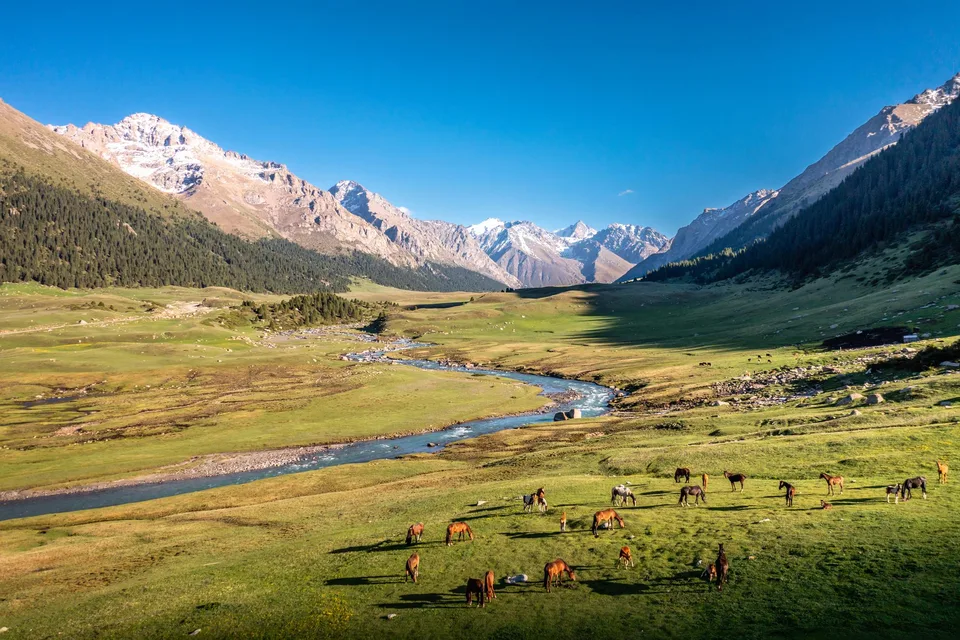
Back on 3 February 2026, international adventure travel platform Much Better Adventures placed Kyrgyzstan first in its ranking of the world’s best destinations for solo adventure travel. The publication did not attract much attention inside the country at the time, but in recent days the ranking has begun circulating widely across Kyrgyz media and social networks.
That does not make the result any less significant. If anything, this is a good moment to look beyond the headline and ask why Kyrgyzstan ranked ahead of more established tourism destinations, and how this kind of international attention can be converted into sustainable economic value.
The February list highlights growing interest from experienced solo travellers, along with Kyrgyzstan’s mountain routes, alpine lakes, nomadic culture and relatively uncrowded landscapes.
Why Kyrgyzstan
Travellers increasingly look for more than comfort. They want experiences that are difficult to replicate elsewhere.
This is where Kyrgyzstan has a genuine competitive advantage.
The Tian Shan, high-altitude lakes, trekking routes, horse-riding journeys, yurts, open steppe and relatively untouched natural landscapes offer exactly the type of product that adventure travellers are looking for.
Much Better Adventures describes Kyrgyzstan as a destination combining mountains, lakes, nomadic traditions and active travel, while many routes still remain comparatively uncrowded.
That sense of discovery is part of the country’s value proposition.
Kyrgyzstan has not yet become a mass-tourism destination. In some respects, that is an advantage.
Travellers do not buy a country. They buy an experience
The tourism model itself is changing.
For many international travellers, value is no longer defined by five-star hotels alone. What matters is the uniqueness of the journey.
Hiking to Ala-Kul.
Spending a night in a yurt at Song-Kul.
Riding across high-altitude pastures.
Walking through Skazka Canyon.
Spending several days far from dense urban infrastructure.
These are the experiences that increasingly define Kyrgyzstan’s tourism product.
And they cannot be replicated simply by building another hotel.
A No. 1 ranking does not guarantee economic results
The ranking should not be overstated.
This is not an official intergovernmental tourism competitiveness index. It is a destination list prepared by a specialist adventure travel company. Much Better Adventures says its selection considered infrastructure, price and visa entry procedures, while placing the greatest emphasis on destinations that feel genuinely adventurous and capable of delivering a transformative travel experience.
Even so, for Kyrgyzstan’s positioning in the international adventure travel segment, the ranking is a valuable marketing signal.
The key question is now different:
how much economic value can Kyrgyzstan retain from growing international interest?
A visitor should not simply arrive, take photographs and leave.
They should use local guides, stay in hotels and guesthouses, hire transport, buy food and handicrafts, visit national parks, book excursions and, ideally, return.
That is how a natural advantage turns into business revenue, regional jobs and tax receipts.
What needs to happen next
Kyrgyzstan is in an unusual position: much of its international tourism brand is developing organically.
The role of government and business should not be to redesign that product, but to make it more accessible, safer and more reliable.
That means better roads to key tourism areas, clear navigation, sanitation infrastructure, safer mountain routes, professional guides, digital maps and booking tools, stronger connectivity and understandable service standards.
Air access is another critical issue.
The easier it becomes to reach Kyrgyzstan from Europe, the Gulf and Asia, the more likely international interest is to translate into actual visitor flows.
At the same time, Kyrgyzstan should avoid the mistake made by many tourism regions: uncontrolled construction in the very landscapes that create tourism demand in the first place.
The country’s main tourism asset is its natural environment.
If that asset is damaged for short-term commercial gain, the reason many international visitors come to Kyrgyzstan will gradually disappear with it.
The opportunity goes beyond tourism
A successful tourism brand also shapes the broader perception of the country.
A person who first comes to Kyrgyzstan as a traveller forms a direct impression of its safety, people, institutions and possibilities.
Some of those travellers are entrepreneurs, investors and professionals who may later return for entirely different reasons.
Tourism therefore also becomes a tool of international positioning.
Kyrgyzstan can increasingly be associated with a distinct identity: mountains, open space, nomadic culture and genuine adventure.
That kind of brand cannot be built by an advertising campaign alone.
This is why the No. 1 ranking is interesting.
It suggests that part of Kyrgyzstan’s positioning is already being created by the country itself.
The next task is to protect that advantage and learn how to capture more economic value from it.